Creator Economy

What Actually Happens Inside a Balinese Textile Factory


Over the years, I’ve learned that the best results don’t come from trying to control every detail, but from understanding the process well enough to guide it. And that only comes from being there. From walking the factory floor, watching the prints come to life, and sitting with the people actually doing the work.
Alice MacGillivray
What Actually Happens Inside a Bali Textile Printing Factory
People often ask me what manufacturing in Bali actually looks like — inside a Bali textile printing factory, not the polished version (spoiler, there is no polished version — ha) — the real version.
And the truth is, it’s not something you fully understand until you’re standing in it.
It’s hot, it’s loud, it’s layered, and it’s incredibly hands-on. Nothing feels distant from the making.
The first thing that always strikes me when I walk into the factory is the rhythm of it all. Long tables (I call these the runways) lined with screens. Buckets of dye. Fabric stretched out in lengths that seem to go on forever. There’s movement everywhere — but it’s not frantic. It’s intentional, and with purpose. Everyone knows their role, and there’s a quiet precision to it.
The screen printing process is all done by hand. Each screen is laid down, ink pulled across, lifted, and then repeated again… and again… and again. It’s physical work. Skilled work. And no two runs are ever exactly the same.
That is something I had to learn early on — and something I appreciate and adore about the process now.
Inside a Bali Textile Printing Factory: Imperfectly perfect printing
In more industrial production (for example, digital printing), variation is something you try to eliminate. Here, it’s part of the process.
The pressure of the hand, the way the ink sits, even the weather can affect the outcome. And once you understand that, you stop looking for perfection — and start appreciating the beauty of imperfectly perfect printing.
Before the print table: fabric, feel, and a lot of decisions
Before anything even reaches the print table, there’s a whole other layer of decision making.
Fabric is sourced, tested, and chosen based on how it will take the print, how it will wash, how it will sit on a table, how it feels — I am a super tactile person, especially with fabric — your fingertips become so sensitive to the touch of fabric.
This part matters more than people realise. The base fabric can completely change the final result.
Then there’s colour. What looks one way on a screen or in your mind can translate completely differently onto fabric. There’s a lot of back and forth here — adjusting, testing, reworking — until it feels right.
And it doesn’t always go to plan.
There are delays. There are miscommunications. There are moments where something arrives and it’s just… not it. That is part of working in this kind of environment. It requires patience, flexibility, and a willingness to problem-solve in real time.
Over the years, I’ve learned that the best results don’t come from trying to control every detail, but from understanding the process well enough to guide it.
Why being there matters
And that only comes from being there. From walking the factory floor, watching the prints come to life, and sitting with the people actually doing the work. That is where the relationships are built.
Sandi and I don’t just communicate over WhatsApp and production sheets. We stand side by side, looking at samples, making decisions, adjusting things on the spot. That kind of collaboration is hard to replicate from a distance — and it’s something I don’t take for granted.
There’s also a pace to it all that can feel unfamiliar at first. That things take time — not because people aren’t capable — but because the process itself isn’t designed for speed. It’s designed for doing things properly, by hand, in a way that allows for care and attention.
Once you settle into that rhythm, it actually becomes one of the most valuable parts of working this way. It forces you to slow down, to be more considered, and to stay connected to what you’re creating.
The layer people don’t usually see (and why the Textile Retreat exists)
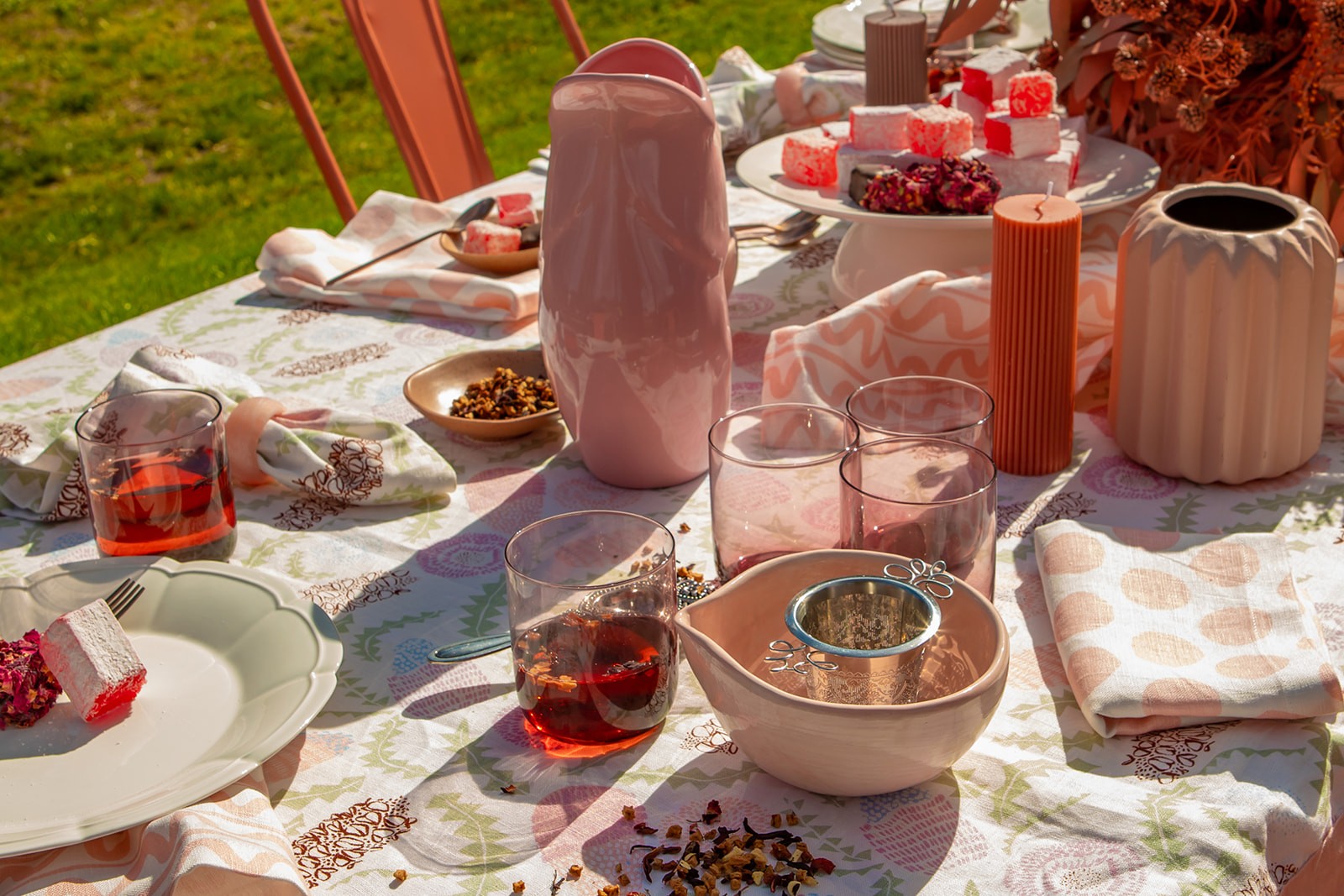
This is the part of the business that people don’t usually see. They see the finished tablecloth, the napkin, the final piece — but not the layers behind it. Not the decisions, the adjustments, the hands that have been part of bringing it to life.
And that’s exactly why I wanted to create the Textile Retreat.
Not to recreate a factory experience — but to give you access to it. To let you step into these spaces, see how it all works, meet the people, and understand the process in a way that you simply can’t from afar.
Because once you see it, you don’t look at things the same way again.
If you want to see what the Textile Retreat with Bright Threads includes, you can view the journey details here.
For more information on why Alice chose to manufacture in Bali, read part one of her blog here.
FAQ
What actually happens inside a Bali textile printing factory?
You’ll see the process up close — screens being laid, ink pulled by hand, fabric moving through drying and finishing — and the rhythm and precision it takes to repeat it run after run.
Is hand screen printing different from digital printing?
Yes. Hand screen printing is manual and physical, and small variations are part of the craft. Digital printing is designed for consistency and uniformity.
Why do colours and prints look different from one run to the next?
Because outcomes can shift with pressure, ink mix, fabric absorbency, humidity, and timing — plus the fact each pass is done by hand.
How do you choose the right base fabric for printing?
It’s tested for how it takes dye, how it washes, how it drapes, and how it feels. The base cloth can change the final print more than most people expect.
What’s the hardest part about manufacturing in Bali?
Learning to work with a slower, relationship-led pace — navigating delays and miscommunication, and solving problems in real time — while staying close to quality and process.
Can I experience this process in person?
Yes — the Bright Threads Textile Retreat is designed to give behind-the-scenes access to process and people (not a staged “factory tour”).