Creator Economy

What Fijian Food Really Is
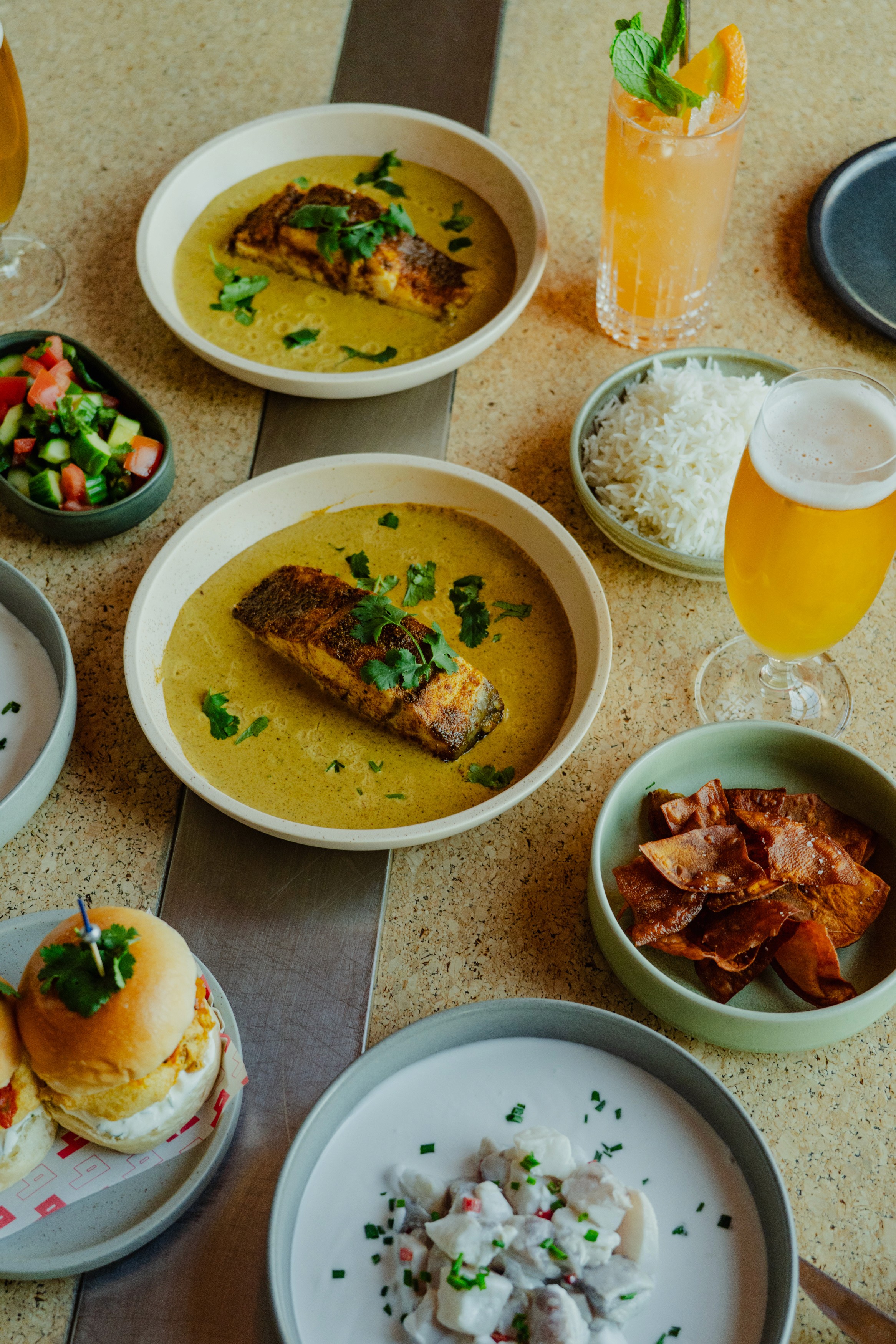

Fijian food is a way of looking after people. A full table, generous cooking, feeding whoever turns up — that's not a 'vibe', it's how you survive and how you keep community strong.
Arrnott Olssen
Food Culture & Identity What Fijian Food Really Is
And why you've probably never tasted it
There's a particular moment I hear from a lot of people who've been to Fiji. They mention the beach. The water. Maybe a day trip. And then they pause, and they tell me about the food — fish and chips, maybe a schnitzel, possibly a buffet with a lot of tropical fruit on the side.
And I have to take a breath.
Because that's not Fijian food. That's the food Fiji has learned to serve to people who aren't expecting anything different.
"When I talk about 'real Fiji', I'm talking about the way people actually eat at home — not a resort menu. Tourists get burgers and schnitzel, but the real flavours live in family kitchens and at community tables."
I'm Arrnott Olssen — Fijian-Australian chef, founder of The Kana Club, and someone who has spent the better part of the last decade trying to close the gap between what Fiji is sold as and what Fiji actually is. And the food is where it starts.
Fiji isn't one cuisine. It's four.
Most people think of Pacific food as a single category. It isn't. And Fiji specifically is one of the most complex food cultures in the Pacific — because it was shaped by four distinct waves of influence that arrived over centuries and never fully separated.
You have the indigenous Fijian tradition: root vegetables, fresh seafood, open-fire cooking, and a deep relationship with the land and ocean. You have the Indian influence, brought by indentured laborers in the late 1800s, who arrived with spices, dal, curry techniques, and a flour tradition that gave Fiji its beloved roti. You have the Chinese influence from later immigration waves, which gave Fijian tables chop suey, soy-based sauces, and glass noodles. And you have the coconut — always the coconut — threading through everything as a base, a sauce, a preservative, and a flavour that binds all the others together.
The result is a table that makes no sense on paper and perfect sense in practice.
"People think Fiji food is one thing, but it's never been one thing — it's everything that's shared the coastline. Indian, Chinese, and Indigenous Fijian influences all sitting together on the same table, like they always have."
The ingredients you've never seen
Before I talk about dishes, I want to talk about produce — because this is where the gap between resort Fiji and real Fiji is most dramatic.
Nama. If you've never heard this word, you're not alone — most Australians haven't. Nama is a sea grape: a small, round, clustered seaweed that grows in Fiji's coastal waters and delivers a sensation unlike anything else I've ever eaten. It pops in your mouth like caviar. It tastes of the ocean — clean, briny, alive. You cannot get it fresh in Australia. You can buy a dried version, but it's not the same. Fresh nama eaten by the water in Fiji is one of those flavours that changes what you think food can be.
Lumi is another seaweed, softer and more delicate, often eaten with coconut cream or used as a wrapper. Wākī is fresh sea urchin — eaten raw, or turned into an emulsion that I've served alongside sweet potato gnocchi at Kana Club events in Sydney. When older Fijian women at my first pop-up tasted the sea urchin sauce, they were skeptical. Then they asked for bread to soak up the rest of it.
Freshwater clams. River prawns. Cassava, dalo, sweet potato — not as sides, but as the anchoring starch that every Fijian meal is built around. These aren't exotic curiosities. They're the everyday ingredients of Fijian home cooking, and almost none of them appear on a resort menu.
"I want people to understand that the best part of Fiji isn't a buffet — it's the market before it gets too hot, when you're buying what's coming in fresh and you can actually see what Fiji tastes like that day."
The Sunday table
If you want to understand Fijian food culture in a single image, picture a Sunday lunch after church. It's not one dish. It's a table — and the table is always full.
There's always a curry, usually lamb or chicken, fragrant and generous. There's always a fish preparation — sometimes curried, sometimes just boiled simply in water with onion and garlic, served with a clear broth that's cleaner and more satisfying than it sounds. Next to the fish, there's always miti: freshly grated coconut squeezed into cream, seasoned with lemon, chili, and salt. A dipping sauce that pulls the whole meal together.
There's cassava. There's dalo. There's rice. There's chop suey — always, at every Fijian gathering, without exception. There's often kokoda, the Fijian ceviche made with raw fish cured in citrus and coconut cream. There might be a pineapple pie. There will be roti.
And whoever turns up is welcome. That's not a sentiment — it's a practice. Fijian food is a way of looking after people.
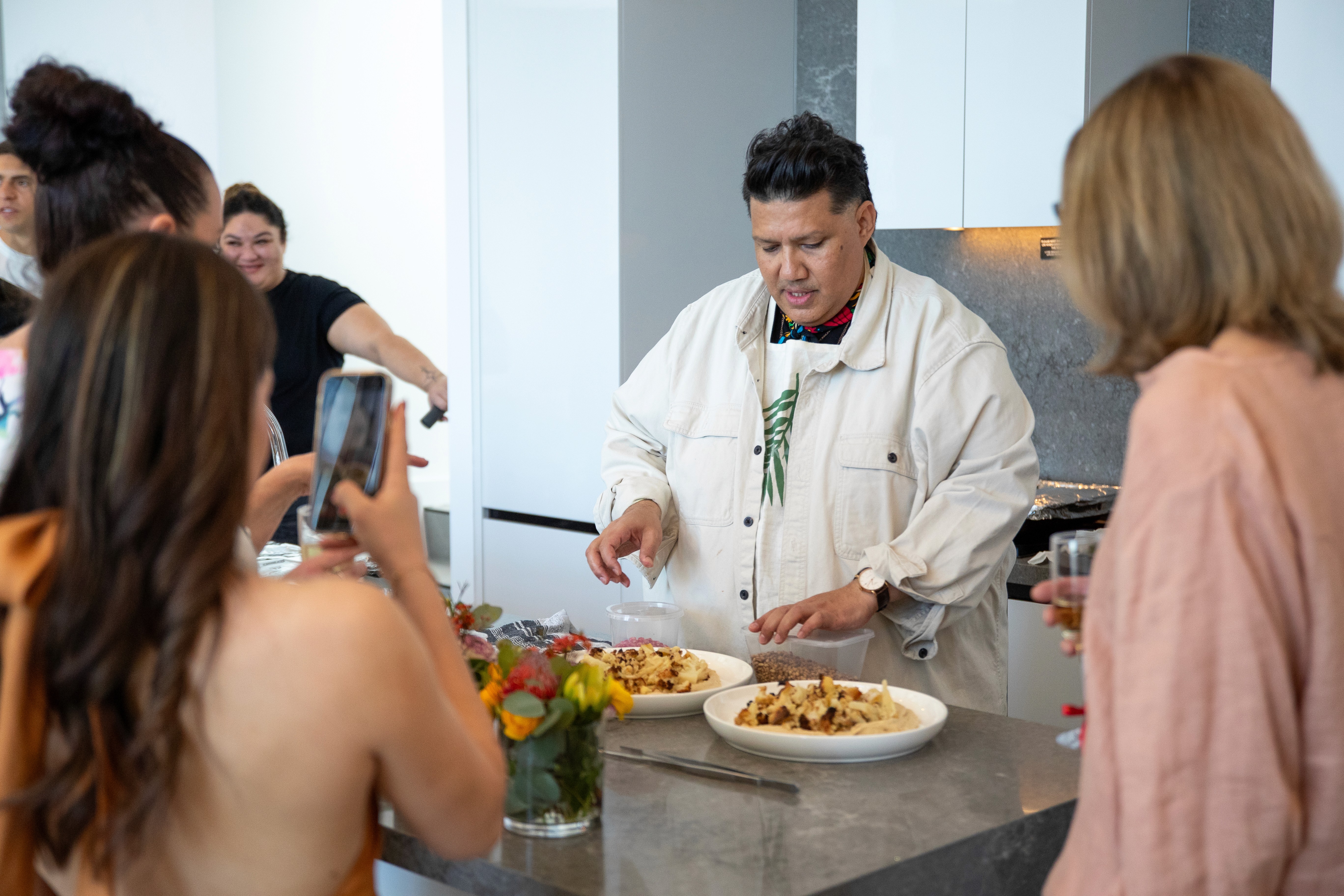
"Fijian food is a way of looking after people. A full table, generous cooking, feeding whoever turns up — that's not a 'vibe', it's how you survive and how you keep community strong."
The modern Fijian food scene
The story doesn't end with tradition. There's a new generation of Fijians — people who left, studied, worked in Tokyo or Melbourne or Paris, and came back with technique — who are doing genuinely exciting things with this foundation.
Young distillers making craft gin and vodka from local botanicals. Organic farms building direct relationships with chefs. A Pizza Lab in an Airstream trailer. Salt makers preserving traditional harvesting methods. Coffee farmers in the highlands growing beans that serious roasters are starting to pay attention to.
Fiji is not stuck in time. Its food is evolving in exactly the way great food cultures do — by staying rooted in something real while being completely open to what's possible.
"The modern Fiji food scene matters too — it's not stuck in time. There are young Fijians coming back with new ideas, building businesses, doing fresh things, and it deserves to be part of the story."
What it actually takes to taste real Fijian food
The honest answer is that you have to go looking for it. It won't come to you at a resort — not because resorts are bad, but because resorts serve what international guests expect, and international guests haven't yet learned to expect something different.
You need to be at the market before it gets too hot. You need to be at someone's Sunday table. You need to be on a sandbank with a fisherman who's just pulled in something extraordinary and is going to cook it over a fire right there.
That's what I try to give people through The Kana Club in Sydney — a taste of it, a door into it. But the real thing is in Fiji. And it's worth every effort to find it.
"Fiji deserves to be positioned as a food destination, not just a beach destination. The food is where the pride and the story lives — and it's what most visitors never really get access to."
Want to experience real Fijian food? The Kana Club Journey is a food and culture experience in Fiji hosted by Arrnott — markets, producers, villages, and a table you won't find in any resort.
→ View the journey details at qurocollective.com
Frequently Asked Questions
What is Fijian food, really (beyond resort menus)?
It’s everyday home cooking shaped by Indigenous Fijian, Indian, and Chinese influences — plus coconut in all its forms — built around seafood, root veg (cassava, dalo, kumala), and community tables rather than “international” hotel staples.
Is Fijian food spicy?
It can be, but it’s not defined by heat. Chillies show up often, but many dishes lean more on coconut cream, citrus, aromatics, and slow-cooked depth than on high spice levels.
What are the most iconic dishes to try in Fiji?
Start with kokoda (raw fish cured in citrus and coconut cream), a proper lovo feast (earth-oven cooking), and fresh fish with miti (coconut cream seasoned with lemon/lime, chilli and salt). Then explore what’s seasonal at the markets.
Where can I taste “real” Fijian food as a visitor?
Go early to local markets, eat where locals eat, and (best of all) join a hosted experience that includes village protocol and access to family/community tables — because the real versions are often not “for sale” on a menu.